High-Traffic Office Areas That Need More Than Daily Cleaning
Most offices have a cleaning routine in place: a quick vacuum here, a wipe-down there, maybe a mop of the floors at the end of the day. It feels like enough, and on the surface, it often looks fine. But looks can be deceiving, especially in a busy workplace where dozens (or even hundreds) of people are moving through the same spaces every single day.
The reality is that daily cleaning, while essential, simply cannot keep up with the level of grime, bacteria, and buildup that accumulates in certain parts of an office. Some areas need more frequent attention and a more targeted approach, and knowing which spots those are can make a difference to your workplace’s hygiene and overall environment.
1. Reception and entry areas
Your reception area is the first thing clients, visitors, and new hires see when they walk through the door. It sets the tone for your entire business. Yet, it’s also one of the most heavily trafficked spots in any office. People are constantly walking in and out, touching door handles, leaning on counters, and sitting in waiting chairs.
Daily wiping of the reception desk is a good start, but it’s not enough on its own. Door handles and push plates are touched hundreds of times a day and are prime spots for bacteria to spread. Glass doors and partitions show every fingerprint and smudge. Chairs and soft furnishings in waiting areas absorb dust, skin cells, and spills over time. These surfaces need regular deep cleaning and not just a surface wipe to stay genuinely hygienic and presentable.
2. Lifts and stairwells
It’s easy to overlook lifts and stairwells because they feel more like transitional spaces than actual work areas. But think about how many people use them throughout the day. Lift buttons are among the most-touched surfaces in any building, and stairwell handrails aren’t far behind.
These areas benefit from more than a daily once-over. Lift interiors, including walls and floors, collect scuff marks, dirt, and airborne grime quickly. A deeper clean on a regular basis (not just a quick wipe of the buttons) keeps these spaces looking well-maintained and reduces the spread of germs between floors.
3. Open-plan workstations
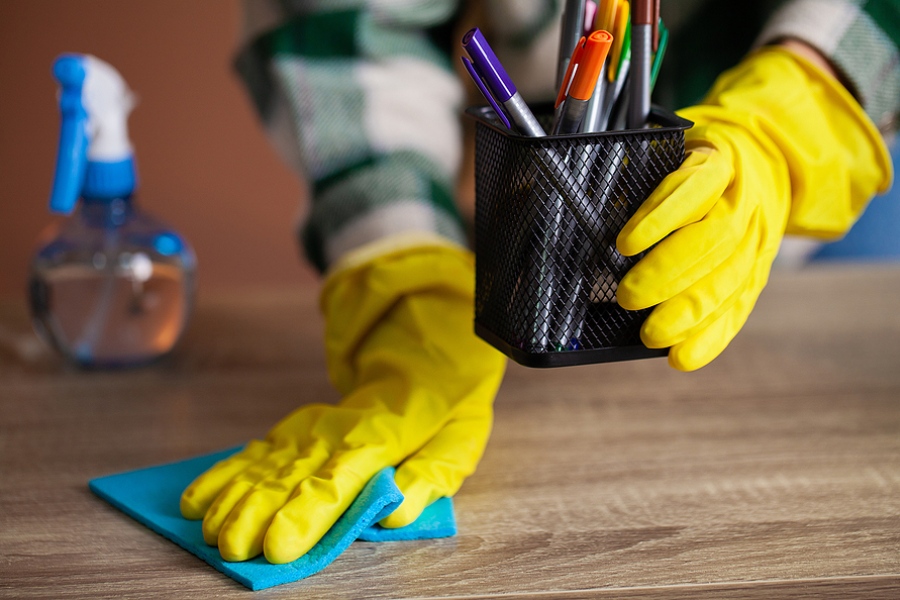
Open-plan offices are wonderfully collaborative, but they’re also breeding grounds for clutter and bacteria. Shared desks, keyboards, mice, and monitors are touched by multiple people throughout the day, sometimes without a wipe-down in between. Add in food crumbs, coffee rings, and the occasional sneeze, and you’ve got a surface that needs more attention than it typically gets.
Studies have consistently shown that the average office desk harbours far more bacteria than a toilet seat, which is a fact that tends to surprise people but really shouldn’t, given how little time most of us spend cleaning our workstations. This is one reason why office cleanliness reduces employee sick days, as cleaner work surfaces directly lower the risk of illness spreading through a team.
For businesses investing in office cleaning in Singapore, ensuring that workstations receive a thorough clean should be a priority. That means sanitising phones, keyboards, and shared equipment, not just tidying the surface.
4. Meeting and conference rooms
Meeting rooms can look pristine between bookings, but they often aren’t. After a full day of back-to-back meetings, these spaces accumulate used cups, pen marks on whiteboards, fingerprints on screens, and chairs pushed haphazardly out of place. The whiteboard might be wiped and the cups collected, but what about the conference table, the presentation clicker, or the video conferencing equipment?
These are shared touchpoints that rarely get the attention they deserve. A deeper, more thorough clean of meeting rooms, including sanitising all shared tech and wiping down chairs and table legs, ensures the space is genuinely clean, not just visually tidy.
5. Pantries and kitchen areas
The office pantry is where people gather and socialise, which also makes it one of the most hygiene-sensitive areas in any workplace. Shared appliances like microwaves, kettles, and refrigerators are used constantly but cleaned inconsistently. Spillages happen, food is left behind, and surfaces become sticky or stained without anyone necessarily noticing until it’s quite obvious.
Here’s where deeper, scheduled cleaning really earns its keep:
- Microwave interiors – Food splatters bake on quickly and are rarely wiped after each use.
- Refrigerators – Old food, spills, and condensation create hygiene issues if not addressed regularly.
- Kettle and coffee machine exteriors – Limescale and coffee residue build up over time.
- Sink areas and taps – Moisture and food particles make these prime spots for bacteria.
- Cabinet handles and drawer pulls – Touched constantly but rarely sanitised.
A daily wipe of counters is helpful, but the pantry needs a proper deep clean on a regular schedule to stay truly hygienic.
6. Toilets and washrooms
This one might seem obvious, but it’s worth addressing because even washrooms that are cleaned daily can fall short. High-traffic office toilets need more than a once-a-day clean. In a busy office, they may need attention multiple times throughout the day, and a thorough deep clean at least once a week.
That means scrubbing grout, descaling fixtures, sanitising soap dispensers, and making sure hand dryers or paper towel holders are clean inside and out. It also means checking and replacing consumables regularly so that the space doesn’t just look clean, but functions well too.
7. Shared tech and common equipment
Printers, photocopiers, communal phones, and shared charging stations are handled by almost everyone in an office at some point. Yet they’re rarely included in standard cleaning schedules. These surfaces collect oils, dust, and bacteria rapidly, and because they’re not obviously “dirty,” they often go overlooked for weeks. Scheduling regular sanitisation of shared equipment is a simple step that makes a meaningful difference to overall office hygiene.
Conclusion
A daily cleaning routine is the foundation, but it’s the deeper, more targeted cleans that truly protect your workspace, your team, and your professional reputation. The areas above don’t just need a quick tidy; they need consistent, thorough attention from people who know what they’re doing.
If you’re looking to raise the standard of cleanliness across your office, Lukis offers comprehensive professional cleaning services across all business sectors. Whether you manage a small office or a large commercial space, our team has the expertise and equipment to keep every corner of your workplace hygienically clean (not just surface-level presentable!). Get in touch with Lukis today and give your office the clean it actually deserves.