5 Smart Tips To Prevent Mould In Singapore Office Carpets
Mould is one of those problems that tends to go unnoticed until it has already taken hold. In office carpets, it develops quietly, fed by moisture, warm air, and the kind of organic matter that accumulates in any busy workspace over time. By the time there is a visible patch or a musty smell that staff start complaining about, the mould has usually been growing for a while.
The good news is that mould in office carpets is largely preventable. It does not require expensive interventions or constant vigilance, just a few consistent habits and an understanding of what creates the conditions for mould to thrive in the first place. Get those right, and your carpets will stay cleaner, last longer, and contribute to a healthier workplace overall.
Why office carpets are particularly vulnerable
Singapore’s climate does a lot of the work for mould. High humidity levels, often sitting above 80%, mean that moisture is almost always present in the air, and carpets are particularly good at trapping it. Add to that the daily foot traffic, the occasional spilled drink, the condensation that drips from air conditioning units, and the dust and skin cells that settle into carpet fibres over time, and you have near-ideal conditions for mould growth.
Office carpets also tend to cover large areas that are difficult to inspect thoroughly on a regular basis. Corners, under-desk spaces, areas near exterior walls, and spots directly beneath air conditioning vents are all zones where moisture accumulates without anyone noticing, until the problem becomes visible or begins to affect air quality.
Professional carpet cleaning in Singapore is more than a cosmetic consideration for this reason. It is a practical measure against the kind of slow-building damage that mould causes to carpet fibres, to the subfloor beneath, and to the health of the people working in the space. Singapore’s humidity demands annual carpet cleaning at an absolute minimum, and in higher-traffic or moisture-prone environments, more frequent treatment is worth considering.
Tip 1: Control moisture at the source
Mould cannot grow without moisture, so the most effective prevention strategy starts with reducing how much moisture your carpets are exposed to in the first place.
The most common culprits are easy to identify once you know what to look for. Air conditioning units that are not regularly serviced can develop condensation leaks that drip onto carpets over time, slowly enough that no one notices until a patch of carpet feels damp or begins to smell. Spills that are not cleaned up promptly soak into carpet fibres and padding, creating a localised moisture reservoir that is slow to dry. Potted plants placed directly on carpeted areas allow water to seep through drainage holes and sit in the pile.
Check your air conditioning units regularly and ensure they are serviced on schedule. Address spills immediately rather than leaving them for the cleaning team to find later. Use waterproof saucers under any plants on carpeted floors, and consider relocating them to hard-floor areas where possible.
Tip 2: Keep air circulating
Moisture that cannot evaporate becomes a problem. Good airflow is one of the simplest and most effective ways to prevent that from happening.
Make sure your air conditioning system is maintaining adequate air circulation throughout the office, particularly in areas that see less foot traffic, like storage rooms, server room corridors, and spaces behind large furniture. These are the spots where air becomes stagnant, and humidity levels creep up without anyone noticing.
If your office has areas with consistently poor airflow, a supplementary fan or a portable dehumidifier can make a difference. It is a small investment relative to the cost of carpet replacement or mould remediation.
Tip 3: Vacuum thoroughly and regularly
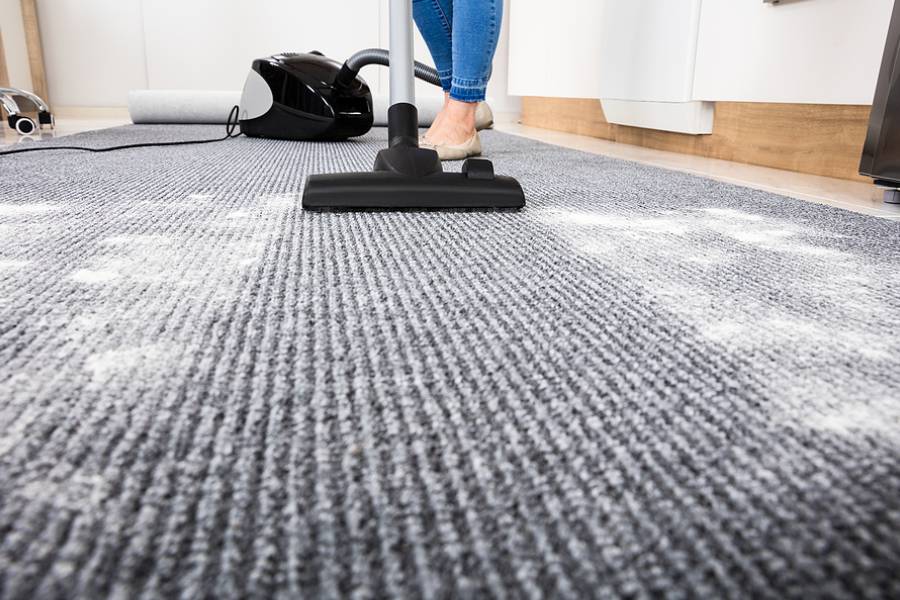
Regular vacuuming does more than keep carpets looking tidy. It removes the organic material (dust, skin cells, food particles) that mould feeds on. Without that food source, mould has a harder time establishing itself even when moisture is present.
The key word here is thoroughly. Surface vacuuming picks up what is sitting on top of the pile but misses what has settled deeper into the fibres. Use a vacuum with strong suction and, where possible, one fitted with a HEPA filter that captures fine particles rather than redistributing them into the air. Pay particular attention to high-traffic routes, areas under desks, and the perimeter of the room where dust tends to accumulate against skirting boards.
Tip 4: Act quickly on spills and damp patches
Speed matters when it comes to liquid on carpet. The longer moisture sits, the deeper it penetrates, and once it reaches the carpet padding and subfloor, drying it out thoroughly becomes difficult.
When a spill happens, blot with a clean, absorbent cloth to lift as much liquid as possible. Follow up with a small amount of clean water if needed, then blot again. Use a dry cloth or paper towels to absorb the remaining moisture, and if the area is large or the liquid was anything other than plain water, consider bringing in a professional to ensure it is fully treated.
If you notice a patch of carpet that feels damp without an obvious cause, investigate promptly. It may point to a condensation leak or a waterproofing issue that needs to be addressed before it becomes a much larger problem.
Tip 5: Schedule professional deep cleaning
Surface cleaning and regular vacuuming go a long way, but they cannot replace periodic professional treatment. Deep cleaning extracts the moisture, dirt, and organic matter that accumulates in the lower layers of carpet fibres over time, the layer that everyday cleaning cannot reach but that mould is perfectly happy to inhabit.
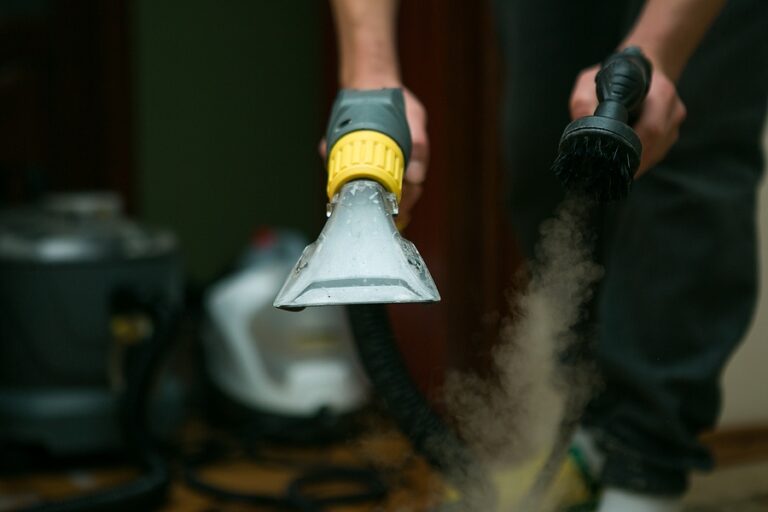
Hot water extraction, commonly known as steam cleaning, is one of the most effective methods for office carpets. It cleans deep into the pile, removes embedded grime, and, when followed by proper drying, leaves carpets in significantly better condition than surface cleaning alone can achieve. The drying process matters: carpets that are left damp after cleaning can ironically become more vulnerable to mould if ventilation is poor, so ensure your cleaning provider accounts for this.
Conclusion
Mould in office carpets is a preventable problem, and the steps to prevent it are not complicated. Consistent habits, prompt attention to moisture, and regular professional treatment are all it takes to keep your carpets clean, healthy, and in good condition for the long term.
Lukis provides comprehensive professional cleaning services across all business sectors, from corporate offices and retail spaces to industrial and F&B environments. Their carpet cleaning services are thorough, professionally executed, and tailored to the demands of Singapore’s climate. Get in touch with Lukis today to find out how we can help keep your workspace clean, fresh, and mould-free.