Do Grade-A CBD Offices Really Need Specialised Cleaning?
Not every office is built the same, and not every office needs the same level of care. But when your workspace sits in a premium CBD building (fitted with marble flooring, floor-to-ceiling glass, high-end furnishings, and shared facilities that dozens of businesses rely on daily), the stakes around cleanliness are noticeably higher. The materials cost more, the expectations are greater, and the margin for error is smaller.
For many businesses occupying Grade-A spaces, the assumption is that standard cleaning will do the job. In practice, that assumption tends to create problems that build quietly over time: surfaces that degrade faster than they should, finishes that lose their lustre, and an overall environment that no longer reflects the premium positioning the address was chosen to project.
What makes a grade-A office different
Grade-A office buildings in Singapore’s CBD (think Raffles Place, Marina Bay, and Tanjong Pagar) are distinguished not just by location but by the quality of their build and the standard of their facilities. These are spaces designed to impress, with architectural details and premium materials that require specific knowledge to maintain properly.
Common features of Grade-A offices include:
- Marble, granite, or engineered stone flooring – beautiful but highly sensitive to acidic cleaning agents and abrasive tools.
- Floor-to-ceiling glass panels and curtain walls – requiring streak-free cleaning methods and appropriate squeegee technique.
- High-specification carpeting – often in meeting rooms and executive areas, needing regular treatment beyond standard vacuuming.
- Exposed concrete or feature ceilings – which accumulate dust differently from standard drop ceilings.
- Premium joinery and fitted furniture – where incorrect products can strip finishes or cause discolouration over time.
These are not materials that respond well to a one-size-fits-all approach. Using the wrong cleaning product on a marble floor, for instance, can cause etching that is expensive and sometimes impossible to fully reverse.
The role of specialist knowledge
This is where the difference between a general cleaning team and a specialist one becomes apparent. Professional office cleaning services that are equipped to handle Grade-A environments bring product knowledge, technique, and an understanding of how different materials behave under different conditions.
Stone floors, for example, need pH-neutral cleaning solutions and regular sealing to maintain their finish. Glass surfaces require lint-free tools and the right technique to avoid streaking, particularly in high-humidity conditions. Upholstered executive furniture needs periodic deep cleaning that goes beyond surface wiping. These are not tasks that can be improvised effectively; they require training and the right equipment.
There are also high-traffic office areas that need more than daily cleaning, where foot traffic, air conditioning, and constant use accelerate the build-up of grime and bacteria in ways that a standard schedule simply cannot keep pace with.
What happens when cleaning is not matched to the space
The consequences of under-maintained Grade-A spaces tend to be cumulative and quietly damaging. Here is what typically happens over time when cleaning is not matched to the environment:
- Surface degradation – Premium materials that are cleaned incorrectly or infrequently begin to show wear faster than they should. Marble dulls. Carpet piles flatten unevenly. Glass develops a film that diffuses natural light. These are not minor cosmetic issues; they are costly to address once they have set in.
- Air quality decline – Grade-A buildings often have sophisticated air conditioning systems, but those systems depend on clean filters and vents to function properly. Dust accumulation in vents and on air handling units contributes to stuffiness and, over time, to increased sick days among staff.
- Pest and hygiene risks – Shared facilities in multi-tenancy CBD buildings, such as lift lobbies, restrooms, pantries, and waste collection points, create conditions where hygiene lapses spread quickly. A single tenant whose space is poorly maintained can affect the experience of others in the building and attract complaints from building management.
- Reputational impact – Perhaps most immediately relevant for client-facing businesses, a poorly maintained office in a premium building creates a disconnect that clients notice. The address says one thing; the state of the space says another. That gap is harder to recover from than most businesses anticipate.
The frequency and detail that grade-A spaces require
Standard cleaning contracts typically cover basic daily tasks like vacuuming, mopping, restroom maintenance, and bin clearing. For Grade-A offices, that baseline is necessary but not sufficient.
A cleaning programme suited to a premium space will typically include:
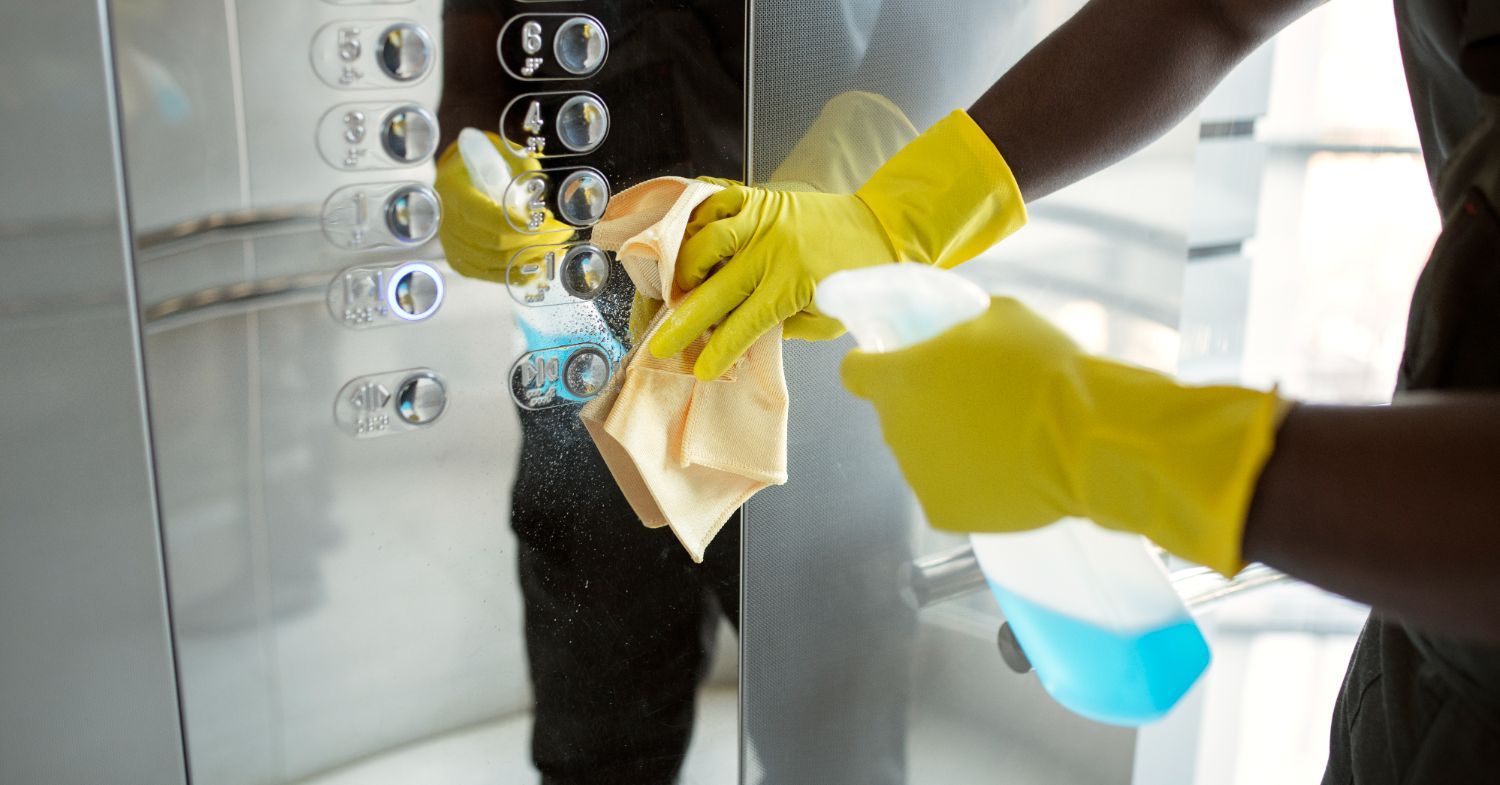
- Daily – Sanitising of high-contact surfaces including lift buttons, door handles, reception counters, and meeting room equipment; restroom checks throughout the day; pantry upkeep.
- Weekly – Detailed attention to glass panels and partitions; vacuuming of upholstered furniture; wiping down of skirting boards and light fixtures.
- Monthly or periodic – Deep cleaning of carpets; stone floor treatment and buffing; cleaning of ceiling vents and air conditioning filters; sanitisation of upholstered executive seating.
This kind of structured, layered approach is what keeps a Grade-A office looking and functioning the way it was designed to.
Matching the service to the standard
There is a straightforward logic to this: if you have chosen a Grade-A address because of what it signals to clients and staff, the cleaning arrangement needs to protect that signal. A premium space that is cleaned to a basic standard will not hold its quality. The environment will drift, gradually and then noticeably, in a direction that works against everything the address was chosen to achieve.
This does not mean cleaning needs to be extravagant. It means it needs to be appropriate, tailored to the materials, the usage patterns, the facilities, and the expectations that come with the space. That requires a provider who understands what Grade-A maintenance actually involves, not one applying a generic checklist regardless of context.
The good news is that the right arrangement, set up properly from the start, largely runs itself. With a trained team, the right products, and a structured schedule, maintaining a Grade-A office to the standard it deserves is entirely manageable, and the results speak for themselves every time a client walks through the door.
Conclusion
Lukis provides comprehensive professional cleaning services across all business sectors, from Grade-A CBD offices and corporate headquarters to retail spaces, industrial facilities, and F&B environments. With specialist knowledge, trained staff, and cleaning programmes tailored to the demands of premium spaces, Lukis ensures your office consistently reflects the standard your business stands for. Get in touch today to find out how Lukis can help.