Adjusting Office Cleaning Scope For Hybrid Work Weeks
Half the seats are empty on a Monday, three-quarters filled on a Tuesday, and by Friday afternoon the floor is quieter than a public holiday. Yet the cleaners still come in for the same hours, doing the same tasks. The invoice does not care whether anyone was here to use the toilet.
This is now the norm in Singapore offices, and the operational side has not fully caught up. Most cleaning schedules were written when everyone came to work five days a week. A hybrid week produces uneven usage that the standard scope was never built for, so you end up paying for spotless surfaces on the days no one touches them and reacting to complaints on the days everyone does. Getting the scope right for a hybrid office is less about cutting the contract than about moving the work to where the work actually is.
Look at when the office is actually busy
Start with the door-swipe data or the room-booking system. Two weeks of it is enough to see the pattern: which days pull heavy attendance, which days are close to empty, and which meeting rooms and pantries take the load. In most offices the peak hours are not distributed evenly across the week.
That pattern is what the cleaning scope should map to. If Tuesdays and Wednesdays account for two-thirds of the coffee cups and pantry mess, then the touchpoint cleaning, bin rounds and toilet checks on those days need to be denser than the current spread across Monday to Friday. A schedule that assumes uniform traffic wastes labour on quiet days and misses the mark on busy ones.
Split the scope into a fixed base and a variable layer
Some tasks do not change with attendance. Toilets still need daily cleaning while the building is open, glass doors still show fingerprints, and floors still collect dust from the corridor. That is your fixed base, and the schedule should protect it regardless of headcount.
The variable layer covers everything that scales with the number of people. Pantry wipe-downs, desk sanitisation, meeting-room resets, and bin collection frequency all sit here. These are the tasks that should get more time on the heavy days and less on the light ones. When you brief a cleaning company, distinguish clearly between the two so quotes come back structured that way and not as a single blob of daily cleaning.
A standard scope for office cleaning services already lists the tasks most offices need covered, which gives you something concrete to sort into base and variable columns rather than starting from a blank page.
Move the deep clean to a day the office is empty
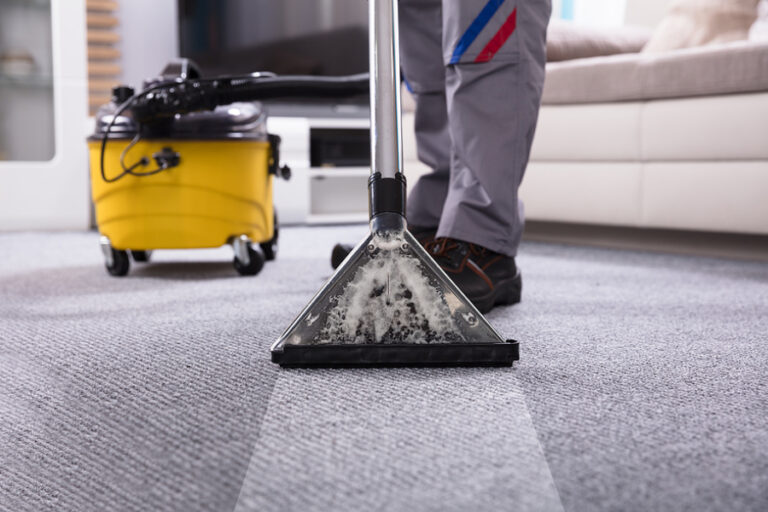
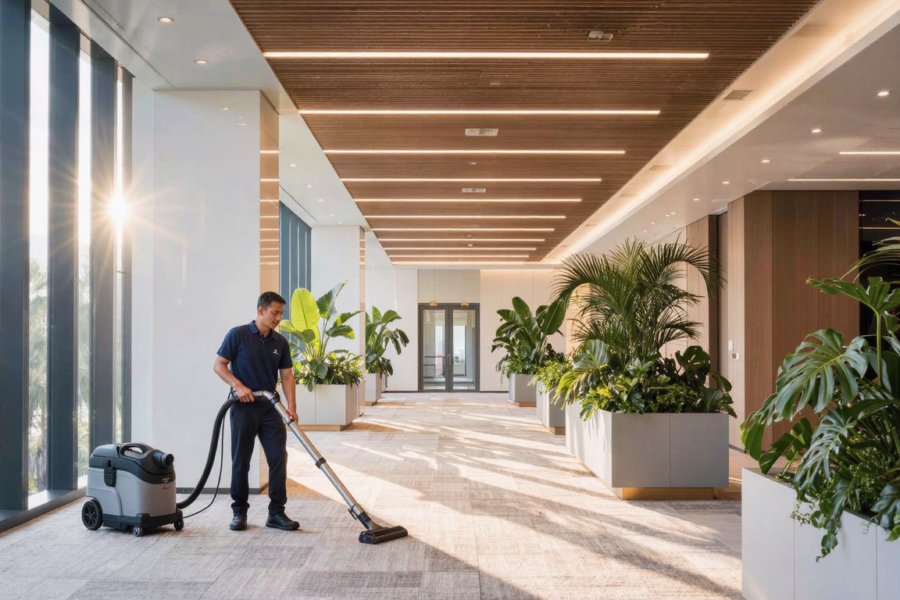
Nobody wants to smell carpet extraction chemicals during a client meeting. In a five-day-in-the-office model, deep cleaning had to fit around whoever was working late. With hybrid attendance you almost certainly have a day when the office is close to empty, and that is when the vacuuming, upholstery work and floor scrubbing should happen.
This one change tends to lift complaint volumes noticeably. Deep cleaning becomes less disruptive, drying times stop being a problem, and the office comes back to full occupancy on Tuesday visibly cleaner than it left on Friday.
Rethink where the effort goes, not just when
Hybrid work does not spread evenly across the floor either. Hot-desk zones, phone booths, project rooms and pantries take a disproportionate share of the wear, while permanent-seat areas take less than they used to.
The high-traffic office areas that used to define your daily brief may have shifted since your last review, and the schedule should move with them. A headcount-based scope written three years ago is often over-servicing a wing that now sits empty most of the week and under-servicing the collaboration hub that everyone piles into on the busy days.
Reallocating hours costs nothing if the total stays the same, and the visible experience of the office changes on day one.
Talk to your provider before the next quote review
A good provider will already have opinions on how to adjust scope for a hybrid office, because they see the pattern across many clients. Ask them what they would move, what they would keep and what they would drop. Ask for the reasoning, not the marketing.
If they respond with a template answer that mentions no specifics from your floor, that alone tells you something about how the account is being managed. Real operational thinking sounds like real operational thinking.
A short checklist for the next scope review
- Pull the last four weeks of attendance or badge data before you start.
- Map cleaning tasks to attendance days, not to a habit of Monday-to-Friday-as-always.
- Identify one fixed base of tasks and a variable layer that flexes with headcount.
- Schedule the deep clean on the quietest day of the week.
- Confirm the pantry and toilet coverage matches the busy days, not the average day.
- Book a review at three months. Attendance patterns are still shifting.
A note on cost
Adjusting the scope is not the same as cutting the price. Sometimes the total hours go down and the bill follows. Just as often the hours stay the same but land differently in the week, and the visible result is better.
The point of the exercise is to clean the office you have today, not the office you had in 2019. A schedule written before hybrid settled in will always show the strain in one direction or another, whether that is quiet complaints on the busy days or wasted hours on the quiet ones.
Bringing in a fresh set of eyes helps as much as the data. Your provider sees your floor forty times a month, and their view of where the wear actually falls is a useful counterweight to your own.
If your current schedule was written before hybrid work settled in, it is probably due a look. Get in touch with Lukis for a walk-through of your floor, and we will help you work out where the cleaning hours are earning their keep and where they are not.