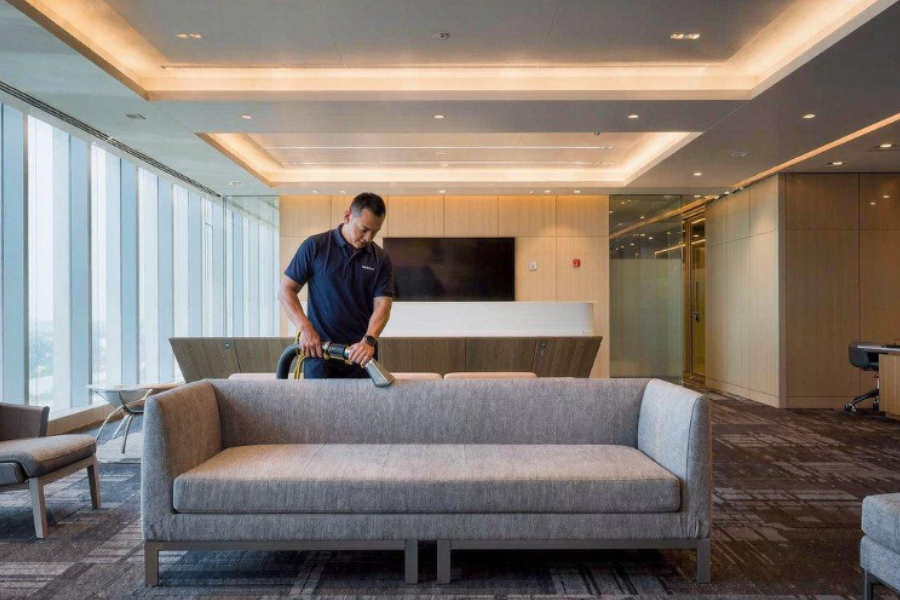
How Often Should Office Sofas And Chairs Be Deep Cleaned
The reception sofa looks fine from a distance. Stand closer and you can see the slight darkening on the arm rest where every visitor rests a hand, the sheen where trousers have polished the seat over hundreds of meetings, and the crumb wedged where the cushion meets the frame. The chair the boss sits on for eight hours a day has probably absorbed more skin oil than any other object in the office.
Upholstery gets less attention than carpets in cleaning schedules, mainly because the wear shows more slowly. But upholstery has none of the vacuum-friendly geometry that carpet has. Dirt sinks into the padding, sweat and body oil bind to the fabric, and by the time anyone notices, the seat is fifty per cent grubbier than it should ever have been allowed to become. So how often should you actually be deep cleaning office upholstery? The short answer is more often than most offices do, and the exact interval depends on the piece.
Reception sofas and lounge chairs
Reception areas take the most traffic per square metre of any upholstered surface in the office. Every visitor, every candidate, every delivery driver on a wait leaves something on the seat. A deep clean every six months is a fair baseline for most Singapore offices, and every four months for offices with a busy walk-in flow.
Fabric here also tends to be lighter in colour and shows soiling faster, which pushes the frequency up. Between deep cleans, a monthly wipe of arms and headrests and a weekly vacuum with an upholstery attachment catches the surface layer before it sets in. That is a small habit but it doubles the useful life of the fabric.
Meeting-room chairs
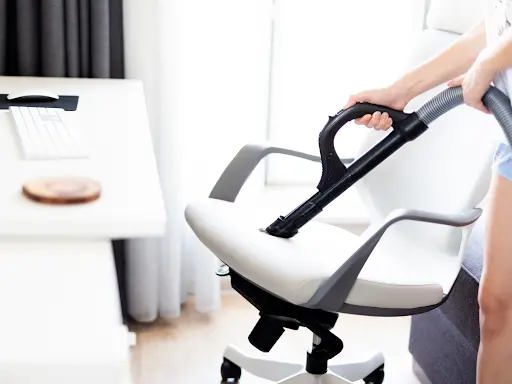
The mesh-back task chairs common in Singapore meeting rooms look easier to keep clean than they are. The mesh traps hair and airborne dust, and the seat cushion absorbs everything a fabric sofa would.
Aim for a deep clean every nine to twelve months for chairs used a few hours a day, and every six months for chairs in rooms that run back-to-back sessions. Chairs that never get used, in a room that is booked twice a month, can go longer.
The judgement here is based on the actual hours the chair is sat on, not the frequency the room appears on the calendar.
Your team’s own workstation chairs
The chair someone sits in for eight hours a day is doing the hardest work of any upholstered piece in the office. Sweat, hand cream, food debris and hair all go into the seat and back over months. A deep clean every twelve months is the minimum for personal chairs, and every eight months if the space runs warm and the fabric is a darker weave that hides the buildup.
If you have chairs assigned to specific individuals, the deep clean can be scheduled to line up with the annual carpet clean, which is a common package that Lukis and other providers offer under professional carpet cleaning. Bundling the two shortens the disruption.
Signs a piece is overdue
Sometimes the calendar says one thing and the fabric says another. Trust the fabric.
Any two of the signs below and the piece is overdue. The list is short and specific because the point is a quick decision, not a full audit.
- A visible line of darker fabric where hands, hair or trousers make contact regularly.
- A faint musty smell that appears when the office has been closed for a long weekend.
- A powdery residue when you pat the cushion firmly.
- Static that seems to build up faster than it used to.
- A visible stain that has been there long enough that people stop noticing it.
The common office allergens most often trapped in fabric are the reason a stale-smelling chair keeps its smell even after the surface has been wiped. Dust mites, pollen and skin cells settle into the padding and no amount of surface wiping reaches them.
Fabric type dictates the method
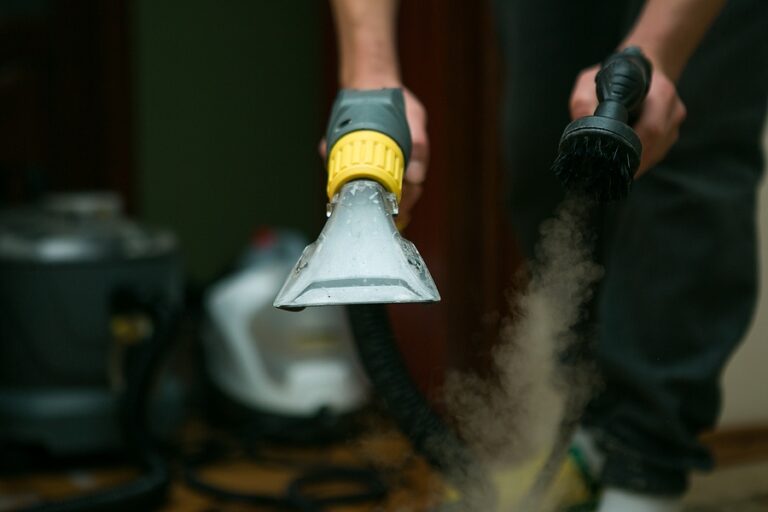
The fabric decides the method: microfibre and polyester can usually handle hot-water extraction, wool and viscose blends need lower temperatures and a slower dry, and leather or pleather need conditioning rather than extraction. If the wrong method is used, the fabric can shrink, discolour or lose its finish, and no amount of frequency undoes that damage. A serious cleaning provider will test a small hidden patch before starting work on an unfamiliar fabric, and will explain what they intend to do before they arrive, especially for pieces that came with the office and not the tenant.
Drying time in Singapore’s humidity
Extraction cleaning leaves the fabric damp. In Singapore’s ambient humidity, a poorly ventilated room can hold that moisture long enough for a musty smell to develop, which is the opposite of the effect you were paying for.
Book the work for a day when the air-conditioning can run afterwards, or for a Friday evening so the fabric has the weekend to dry properly. Wool blends and heavy foam cushions in particular need airflow for at least twelve hours before anyone should sit back down on them.
If a piece is still noticeably damp the next morning, flag it to your provider so they can adjust the method or the dwell time on the next visit. A note in the shift log is enough, and it saves the same problem from happening on the same sofa three months later.
A short schedule for most Singapore offices
- Reception sofas: every 4 to 6 months.
- Meeting-room chairs: every 6 to 12 months, depending on use.
- Workstation chairs: every 8 to 12 months.
- Any piece with a visible or smell-based sign of buildup: as soon as practical.
Set the schedule once and adjust it after a full year of data. If a piece is coming back visibly dirty faster than the interval, the interval is too long, and if it is coming back looking barely used, you can stretch it out. This is the kind of adjustment a good vendor is happy to help you tune, because they see the fabric close up every time.
If your office upholstery has never been deep cleaned or you cannot remember the last time it was, that is your answer for when to book it in. Get in touch with Lukis for a look at what your pieces need, and we will build a schedule that fits how they are actually used.